
Red Lines in the Situation Room: Trump Weighs 60-Day Ceasefire Accord with Iran
President Donald Trump convened an emergency national security meeting to make a final determination on a tentative framework agreement aimed at extending the current Middle East ceasefire, declaring that a total reopening of the Strait of Hormuz remains a strict condition for any American signature.


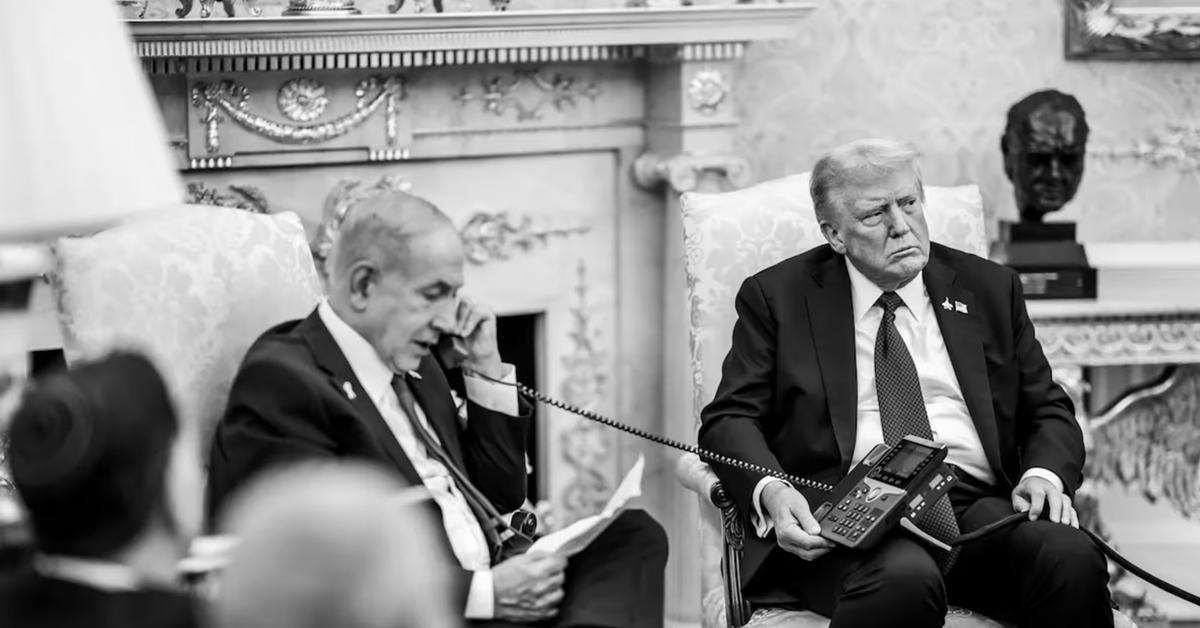
The White House has entered a phase of critical national security evaluation regarding the three-month-old war in West Asia. Following intensive back-channel diplomacy mediated by regional partners in Qatar, President Donald Trump convened an emergency session in the White House Situation Room with his top military and intelligence advisors.
The high-level huddle was called to make what the president termed a "final determination" on a proposed memorandum of understanding. The tentative arrangement would extend the fragile regional ceasefire by 60 days to allow formal negotiations to commence over Iran’s nuclear program and commercial shipping access. However, the White House left no room for ambiguity following the two-hour meeting, releasing statements confirming that the president will only sign off on a framework that completely satisfies his administration's foundational red lines.
Non-Negotiable Terms in the Waterway
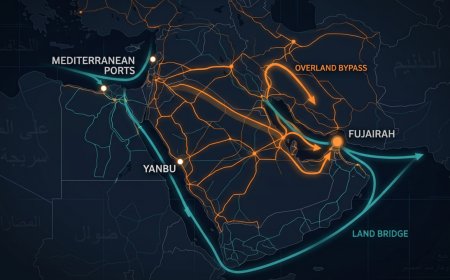
The primary hurdle to transforming the tentative memorandum into a signed diplomatic reality is the absolute security architecture of the Strait of Hormuz. The strategic shipping lane, which handles a significant portion of the world's liquefied natural gas and oil transit, has been a central theater of kinetic conflict.
The administration has articulated several explicit mandates regarding the waterway that Iran must accept before any sanctions relief is finalized:
-
Unrestricted Shipping Traffic: The Strait of Hormuz must be immediately and permanently opened for international navigation in both directions, completely free from state-sponsored interdiction or harassment.
-
Eradication of Arbitrary Tolls: The White House has completely rejected a recent Iranian proposal to formalize transit tariffs, mandating that shipping must remain entirely toll-free.
-
Immediate Mine Clearance: The framework dictates that Tehran must complete the immediate identification, removal, and detonation of any remaining water mines within a strict 30-day window.
In a public statement detailing the parameters of the talks, President Trump indicated a willingness to transition away from the current aggressive naval blockade to allow commercial vessels to begin heading home, but he emphasized that "no money will be exchanged until further notice," drawing a hard line against premature financial concessions.
The Uranium Stockpile Dilemma
Beyond the immediate maritime logistics, the underlying friction of the 60-day window involves the future of Iran's nuclear capabilities. Vice President JD Vance noted that while negotiators are incredibly close to a structural breakthrough, deep divisions remain over the exact verbiage governing Iran's highly enriched uranium reserves.
                     [ CEASEFIRE COMPLIANCE ARCHITECTURE ]
                                       │
        ┌──────────────────────────────┴──────────────────────────────┐
        ▼                                                             ▼
[ MARITIME MANDATES ]                                        [ NUCLEAR MATRIX LIMITS ]
* Immediate 30-day mine detonation                          * Verifiable freeze on 60% enrichment
* Elimination of all maritime shipping tolls                 * Structural disposal of current stockpiles
* Complete lifting of the U.S. naval blockade                * Complete ban on weaponization paths
International Atomic Energy Agency metrics indicate that Iran currently possesses a significant stockpile of uranium enriched up to 60% purity, a narrow technical step away from weapons-grade threshold capabilities. The American negotiating team is demanding that this material be systematically unearthed and neutralized under joint supervision, a condition that hardline factions within Tehran are fiercely resisting.
Lingering Distrust and the Road to Ahmedabad
The domestic political landscape in Tehran further complicates the path toward a stable signature. Following the conclusion of the Situation Room meeting, Iranian Parliament Speaker Mohammad Bagher Qalibaf expressed deep public skepticism regarding American diplomatic guarantees. Qalibaf stated on social media that Tehran has zero trust in verbal frameworks and would only judge the agreement based on physical actions on the ground, warning that "the winner of any agreement is the one who is better prepared for war the day after it is signed."
As U.S. Central Command maintains a heavy deterrent presence in the skies with active F-16 patrols over the Gulf chokepoints, the diplomatic ball remains squarely in the court of the executive leadership. President Trump’s standard for success is explicit: he will not accept a temporary pause that allows a regional adversary to quietly rebuild its industrial base. If the upcoming weeks of the 60-day window fail to yield verifiable progress on both maritime freedom and nuclear disarmament, the Pentagon has made it clear that the transition back to active military enforcement will be instantaneous.
What's Your Reaction?
 Like
0
Like
0
 Dislike
0
Dislike
0
 Love
0
Love
0
 Funny
0
Funny
0
 Wow
0
Wow
0
 Sad
0
Sad
0
 Angry
0
Angry
0







Comments (0)