
Algorithmic Peace, Kinetic War: The Bizarre Disconnect as Israel Seizes Historic Beaufort Castle Amid Ceasefire Talks
Highlighting a jarring divide between international diplomacy and frontline realities, the Israel Defense Forces' Golani Brigade executed a major night assault to capture the iconic medieval Beaufort Castle. The highly symbolic territorial capture comes directly on the heels of official announcements that both sides had agreed to a mutual cessation of attacks.

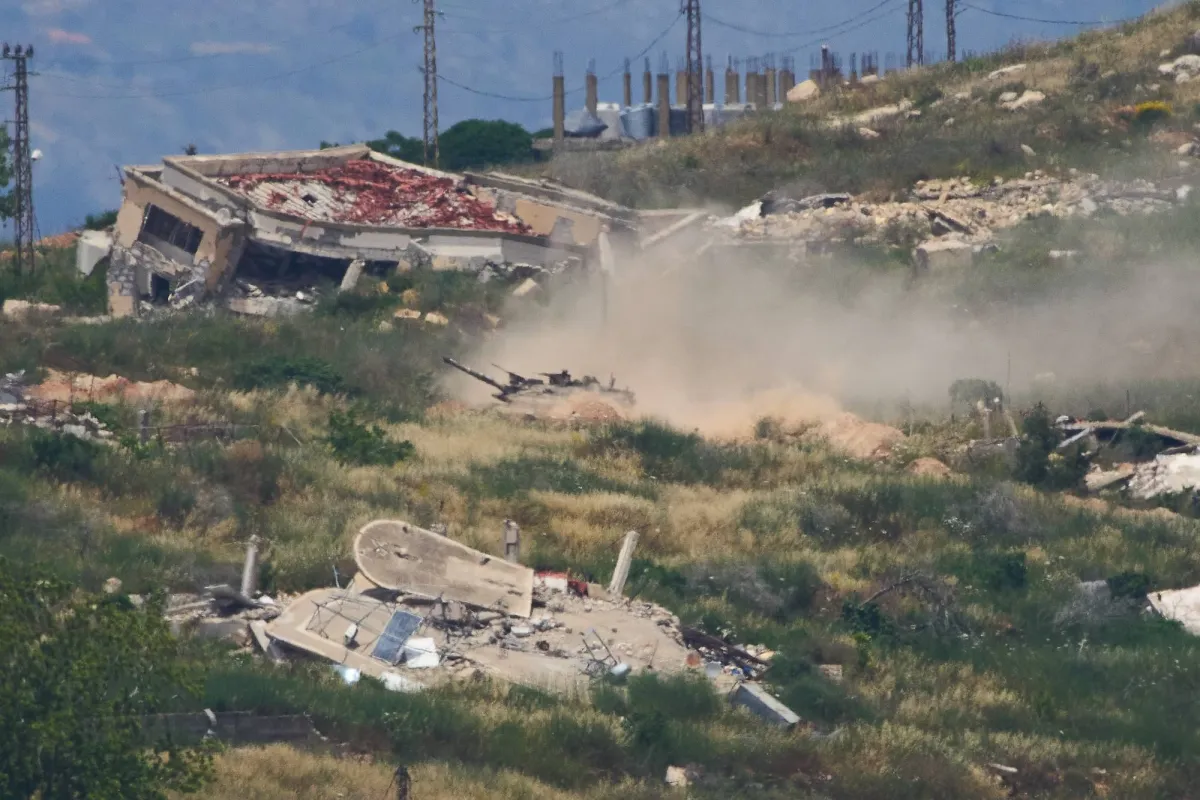
The widening gap between diplomatic rhetoric in foreign capitals and the raw, kinetic reality on the ground has rarely been as starkly illustrated as it was in the hills of southern Lebanon this week. Just as international mediators finalized frameworks for an extended regional ceasefire, a massive flare-up of nighttime combat operations completely reshaped the frontline geography.
In a high-visibility operation that carries deep historical and psychological weight for both sides, the Israel Defense Forces' elite Golani Brigade launched a coordinated, multi-pronged ridge assault. By dawn, Israeli forces had successfully taken control of Beaufort Castle, the nearly 900-year-old Crusader fortress that sits high above the Litani River valley, establishing a powerful new forward position right in the middle of ongoing peace talks.
The Midnight Ridge Assault
Known historically in Arabic as Qalaat al-Shaqif, the medieval fortress has served as the ultimate strategic keystone of southern Lebanon for centuries due to its formidable topography. Sitting atop a sheer cliff with a dramatic 1,000-foot vertical drop, the fortress provides unhindered, panoramic viewlines stretching across the Galilee Panhandle in northern Israel to the outskirts of Nabatiyeh.
Military dispatches indicate that the assault was executed with rapid intensity:
-
Preparatory Suppression Fire: The ground advance was preceded by an intensive wave of localized artillery, tank fire, and precision airstrikes designed to systematically clear out suspected defensive positions along the rocky approach.
-
The Inflicted Attrition: Combat engineers and reconnaissance teams from the Golani Brigade pushed up the steep incline under heavy fog, engaging in close-quarters skirmishes with mobile Hezbollah units operating along the ridge.
-
Securing the High Ground: By early morning, Israeli troops had breached the outer stone ramparts, immediately hoisting the national flag alongside the insignia of the Golani Brigade from the highest battlements.
The Echoes of a Complex Past
For the Israeli public and the military high command, returning to Beaufort Castle is a moment loaded with historical memory. The fortress was famously captured by the IDF during the 1982 invasion of Lebanon and served as a highly visible, heavily fortified symbol of Israel's nearly two-decade-long southern security zone. When Israeli forces ultimately withdrew from Lebanon in 2000, they blew up their concrete bunkers and abandoned the stone ruins, a moment that Hezbollah long celebrated as a defining victory for its guerrilla campaign.
Speaking in a televised video address with a backdrop of the fortress, Prime Minister Benjamin Netanyahu immediately framed the capture as a historic correction. "Today, we returned to Beaufort differently," Netanyahu declared, seeking to boost his domestic standing amid intense political pressure. "We returned united, determined, and stronger than ever. The capture of Beaufort is a dramatic stage and a dramatic shift in the policies we are leading."
Leveraging the Negotiating Table
The immediate reaction from Beirut was one of intense fury and deep geopolitical anxiety. Lebanese state authorities strongly condemned the military overreach, viewing the deeper territorial push as a blatant violation of international sovereign law.
Regional defense analysts suggest that the sudden focus on capturing the historic site was driven by an desire to lock in tangible territorial gains before international pressure forces an absolute freeze on troop movements. By physically occupying the dominant high ground north of the international border, Israel enters the upcoming rounds of Washington-mediated talks with massive tactical leverage, effectively holding a geographic gun to the head of the Litani River valley.
For the thousands of civilians who have been forced to flee the intensifying combat zones across Nabatiyeh and Tyre, the return of the Israeli flag to the ancient stones of Beaufort signals a terrifying reality. It underscores that regardless of what optimistic joint communiqués are issued by diplomats in distant capitals, the actual borders of the Middle East continue to be drawn by heavy armor and frontline infantry.
What's Your Reaction?
 Like
0
Like
0
 Dislike
0
Dislike
0
 Love
0
Love
0
 Funny
0
Funny
0
 Wow
0
Wow
0
 Sad
0
Sad
0
 Angry
0
Angry
0













Comments (0)