
The Price of Intelligence: US Tech Markets Retreat as Oracle’s Surging AI Infrastructure Bills Trigger Profitability Fears
Wall Street’s technology sector faced a sharp downturn today, dragging major indices to a one-month low. While broader geopolitical friction played a role, the primary catalyst for the tech-specific retreat was a wave of investor anxiety regarding the monumental capital expenditures required to fund artificial intelligence infrastructure, highlighted by a staggering spending overshoot in Oracle's latest quarterly fiscal report.

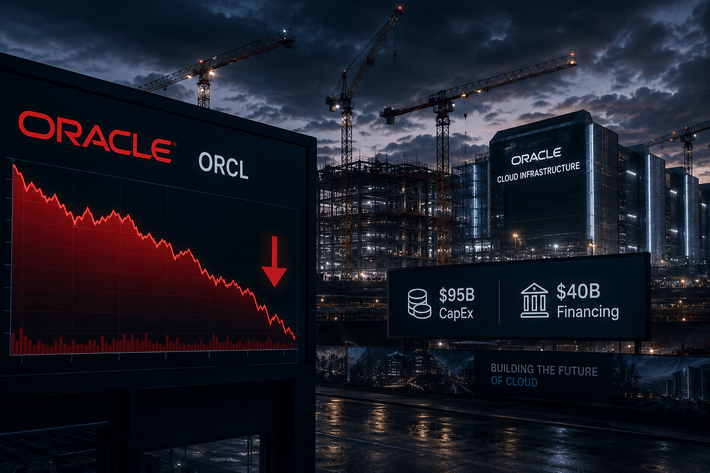
The relentless optimism that has propelled the artificial intelligence gold rush faced a harsh reality check on Wall Street today. Beyond the immediate macroeconomic anxieties gripping international trading floors, US tech markets suffered a distinct, sharp selloff. The primary trigger was a growing collective nervousness regarding the staggering corporate bills behind AI infrastructure development and how long it will take for those massive upfront investments to translate into definitive, bottom-line corporate profitability.
The focal point of investor concern shifted squarely onto enterprise cloud giant Oracle. While the software heavyweight posted strong headline revenue growth, its massive capital expenditure figures for AI infrastructure buildouts caught the market entirely off guard, fueling broader structural anxieties that the tech industry's current spending trajectory may be running ahead of actual near-term monetization.
Oracle’s Massive Capital Bill Sparks Sector-Wide Alarm
Oracle’s fiscal fourth-quarter report initially highlighted historic milestones, including a massive cloud infrastructure backlog driven by large-scale enterprise AI contracts. However, the optimism quickly evaporated when the spotlight turned to the sheer volume of capital being burned to keep those data centers running.
The numbers detailed in the corporate disclosure sent shockwaves through tech portfolios:
-
Sustained Capital Overshoot: Oracle revealed it spent a massive 55.7 billion dollars on capital expenditures for the fiscal year ended May 31, significantly overshooting the company’s own internal guidance of 50 billion dollars.
-
A Ballooning Debt Trajectory: To fund its continuous data center buildouts, the company confirmed it had already raised 43 billion dollars in debt financing alongside 5 billion dollars in equity over the past fiscal year alone.
-
No Sign of a Spending Slowdown: Management stated that net capital expenditures for the upcoming year will swell even further to approximately 70 billion dollars, requiring an additional 40 billion dollar capital raise through combined debt and equity instruments.
Investors Demand Immediate Financial Proof
The aggressive selloff that pulled down neighboring software and hardware indices highlights a fundamental psychological shift on Wall Street. For the past two years, tech companies were routinely rewarded by the markets simply for announcing new AI partnerships, custom chip orders, or expanded data center footprints.
Today’s market reaction proves that the honeymoon phase has officially ended. Institutional investors are beginning to stress-test the actual return on investment behind these initiatives. With Oracle projecting negative free cash flow as a direct result of its hyper-accelerated infrastructure footprint, analysts are openly questioning whether cloud providers are absorbing too much financial risk before enterprise clients fully integrate and pay for long-term AI workflows.
This anxiety quickly spilled over into neighboring hyperscalers and semiconductor manufacturers, dragging down major tech-weighted indices as fund managers actively trimmed their exposure to high-multiple growth stocks.
Navigating a Multi-Trillion Dollar Funding Test
The tech sector's retreat serves as a critical warning indicator for the broader financial landscape. The massive outlays required to build out global AI computing hubs are no longer viewed by default as automatic buy signals. Instead, they are being closely monitored as massive capital constraints that threaten corporate balance sheets and squeeze near-term profit margins.
As the trading week moves forward, tech giants will remain under heavy scrutiny. The industry is locked in an intense competitive race where slowing down infrastructure spending means losing critical market share to rivals, yet maintaining this aggressive tempo requires unprecedented levels of capital expansion. Until enterprise software platforms can demonstrate that their generative tools are producing enough recurring subscription revenue to offset these multi-billion dollar data center bills, the technology market is likely to remain highly sensitive to any sign of mounting corporate cash burn.
What's Your Reaction?
 Like
0
Like
0
 Dislike
0
Dislike
0
 Love
0
Love
0
 Funny
0
Funny
0
 Wow
0
Wow
0
 Sad
0
Sad
0
 Angry
0
Angry
0











Comments (0)