
Bypassing the Chokepoint: The Infrastructure Race Re-shaping the Middle East
As maritime vulnerabilities threaten traditional trade corridors, Gulf economies are pivoting toward multi-modal land bridges and coast-to-coast pipelines to secure their economic survival.

For decades, the economic geography of the Middle East was anchored by a single, undisputed mathematical reality: the absolute dependency on its maritime corridors. The global energy market and regional domestic economies alike accepted a vulnerable status quo, relying on narrow waterways like the Strait of Hormuz to move the vast majority of the region's wealth to the outside world.
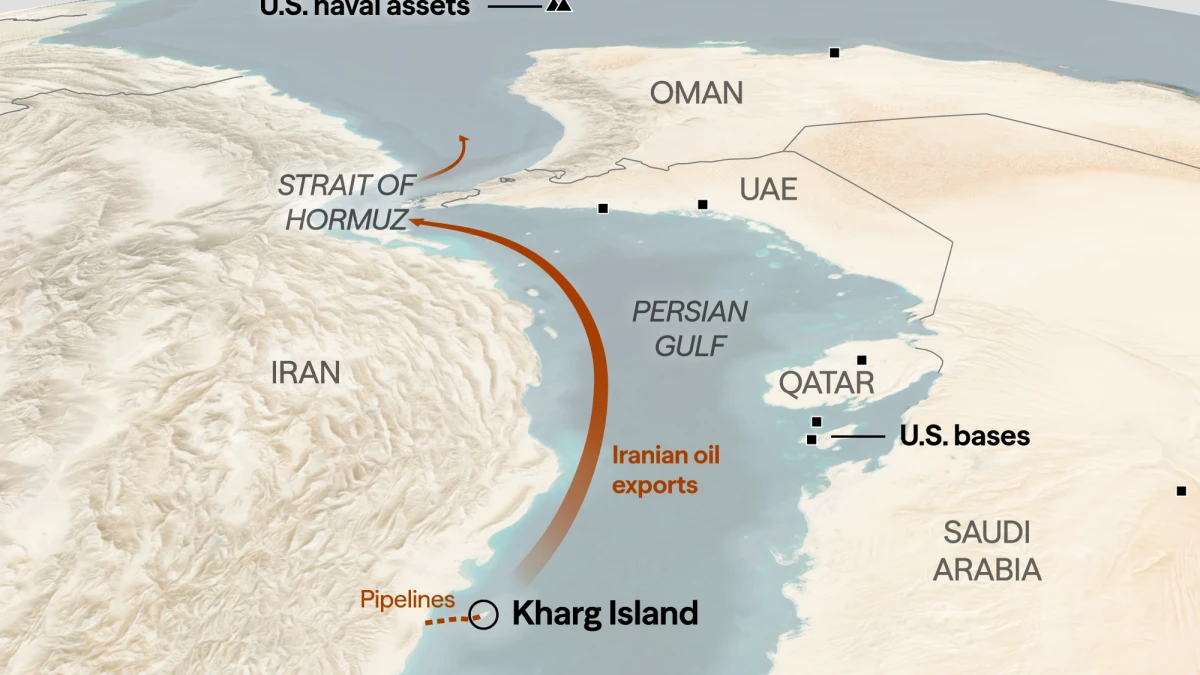
The severe disruptions shaking the Gulf throughout 2026 have decisively shattered that complacency. With the Strait of Hormuz facing unprecedented blockade conditions and heightened kinetic risks, the traditional maritime map of the Middle East has become a critical vulnerability. The economic toll has been immediate, dragging down regional growth forecasts sharply. Yet, beneath the headlines of market volatility, a much deeper, more permanent transformation is taking place. Gulf nations are aggressively accelerating a long-term strategic pivot, attempting to build an entirely new logistical blueprint that relies on redundancy, multi-modal land bridges, and cross-border infrastructure.
The immediate priority for Gulf economies is ensuring that energy assets can reach the high seas without relying on a single, easily disrupted chokepoint. This survival instinct is rapidly elevating the strategic importance of coastlines that face away from the immediate conflict zones.
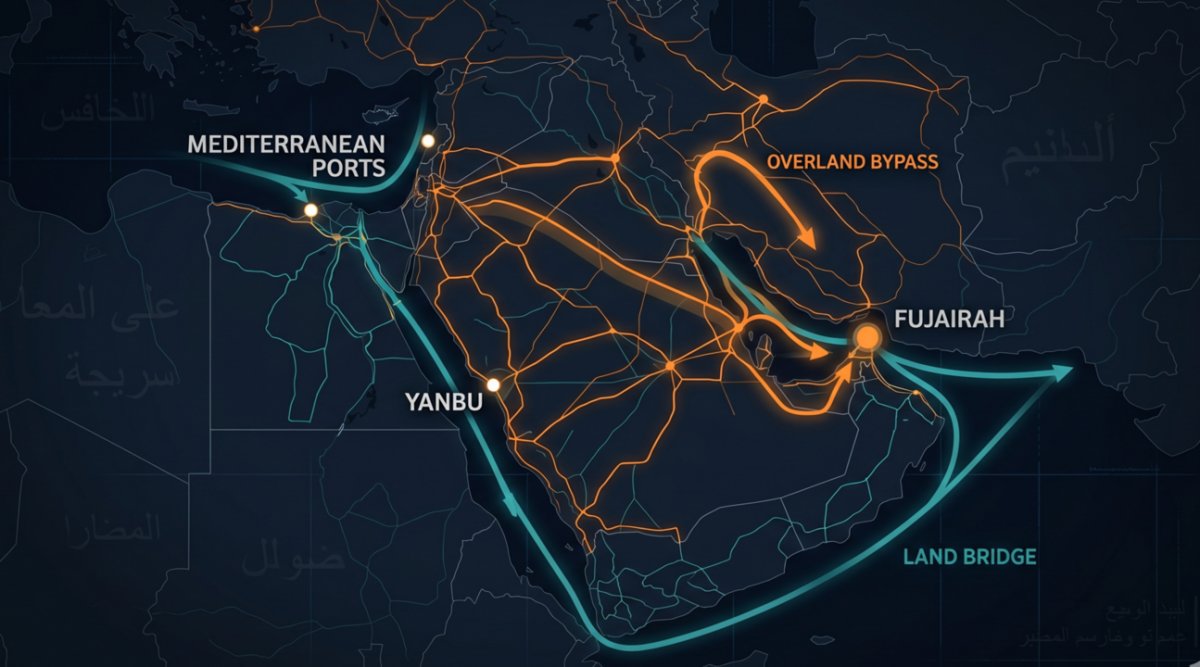
Saudi Arabia has significantly leaned on its extensive overland pipeline infrastructure, utilizing the 1,200-kilometer East-West pipeline to channel crude directly across the Arabian Peninsula to the Red Sea port of Yanbu. Simultaneously, the United Arab Emirates has increasingly leaned on its Abu Dhabi Crude Oil Pipeline to transport a massive portion of its pre-war export capacity directly overland to the port of Fujairah, bypassing the troubled waters entirely. This is no longer just a defensive safety measure; it is a permanent reassessment of energy geography. The planned expansion of export facilities outside the traditional Gulf corridors signals a future where the Strait of Hormuz will never again hold an absolute monopoly over regional energy security.
However, the modern infrastructure race extends far beyond oil pipelines. The more complex challenge facing regional strategists is securing the supply lines for containerized freight, consumer goods, and food imports. Because the Gulf states import up to 85 percent of their basic food requirements, prolonged maritime blockades present a direct risk to domestic stability.
The solution currently being engineered is a fascinating grid of land bridges cutting directly through the Levant. Over the past several months, transport authorities and private shipping giants have quietly activated multimodal corridors that connect the Mediterranean coast directly to the Gulf. Commercial freight is now regularly offloading at Egyptian ports, moving via overland cargo networks through Jordan, and arriving directly in Gulf markets by truck.
Furthermore, this crisis has accelerated an unexpected wave of capital investment into stabilizing and rebuilding transit routes through Syria. From massive sovereign wealth fund investments into Mediterranean port facilities like Tartous, to ambitious agreements to reopen old land trade routes connecting Türkiye to the GCC, the region is stitching itself back together out of sheer economic necessity. For the first time in a generation, the Levant is being actively leveraged not as a theater of geopolitical friction, but as a strategic logistics bridge essential for collective Arab economic resilience.
There are, of course, immense obstacles to fully realizing this new geography. Building cross-border rail networks, expanding highway freight capacities, and harmonizing customs protocols across politically complex borders cannot be achieved overnight. Many of these ambitious land corridors are operating on emergency frameworks, facing bottlenecks, high freight insurance costs, and the constant threat of regional escalation. Furthermore, while a land route to the Mediterranean solves the problem of importing goods from the West, it does little to ease the long-term logistical headache of shipping massive energy volumes to the core consumer markets in East Asia.
Ultimately, the structural realignment taking place across the Middle East in 2026 marks the end of an era. The region is learning the hard way that true security cannot be bought by simply holding vast resources; it requires absolute control over how those resources move. By diversifying transport infrastructure away from historic chokepoints and embedding their economies into shared, overland networks, Gulf and Levantine nations are slowly constructing a far more resilient, shock-resistant landscape. The current crisis may have forced their hand, but the new trade maps being drawn today will define the economic balance of the Middle East for decades to come.
What's Your Reaction?
 Like
0
Like
0
 Dislike
0
Dislike
0
 Love
0
Love
0
 Funny
0
Funny
0
 Wow
0
Wow
0
 Sad
0
Sad
0
 Angry
0
Angry
0









Comments (0)