
Beyond the Unipolar Consensus: Mapping the New Geometry of Global Power
As the expanded BRICS+ outpaces the G7 in combined purchasing power, the traditional unipolar global framework is giving way to a more complex, fragmented, and multipolar economic architecture.

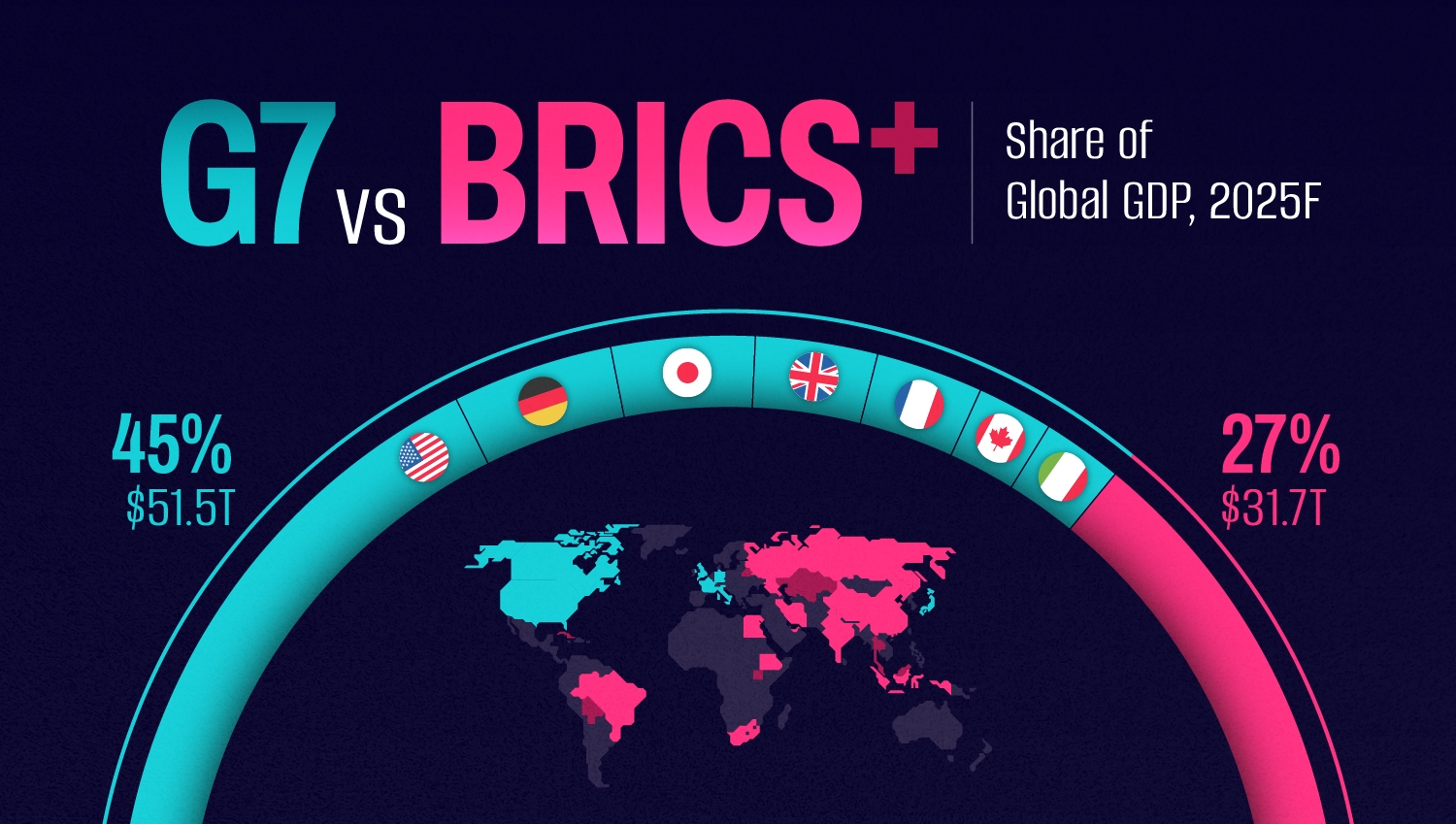
For nearly three decades following the end of the Cold War, the vocabulary of global affairs was relatively straightforward. International relations, trade routes, and financial systems were viewed through a largely unipolar lens, anchored by a deeply entrenched Western consensus. If you wanted to understand where the global economy was heading, you looked almost exclusively to Washington, London, Brussels, and Tokyo.
By mid-2026, that traditional playbook has decisively shifted. We are no longer living in a world dictated by a single, centralized consensus. Instead, the international landscape is undergoing a profound structural re-balancing, transitioning into a highly complex, fragmented multipolar order. This change isn’t driven by sudden conflict or dramatic political declarations, but by the slow, inexorable realignment of global economic architecture and resource security.
To truly understand this new geometry of power, we have to look past the daily political noise and analyze the structural weight of the two major economic spheres: the Group of Seven (G7) and the newly expanded BRICS+ bloc.
For a long time, the G7 represented the undisputed heavyweight division of global economic governance. It remains a remarkably cohesive, hyper-efficient alliance. The nations within this sphere enjoy deep institutional alignment, highly sophisticated financial markets, and a shared regulatory framework that allows them to move with a high degree of diplomatic consensus. When the Western world decides to implement economic policies or coordinate financial strategies, the machinery moves smoothly because the foundation has been reinforced for over half a century.
However, the sheer volume of global economic mass has been steadily pooling elsewhere. The expansion of the BRICS+ network—which now brings together some of the world's largest energy exporters alongside massive, fast-growing consumer economies—has created a competing gravity well. When you evaluate the hard numbers, particularly through the lens of gross domestic product (GDP) adjusted for purchasing power parity (PPP), the collective weight of the expanded BRICS+ sphere has structurally overtaken the G7.
This shift is fundamentally altering how resource security and trade diplomacy operate on the global stage. When a bloc controls both a vast percentage of the world’s critical raw materials and a dominant share of its emerging consumer markets, the old rules of international leverage begin to break down.
Yet, it is vital to recognize that this is not a clean, zero-sum transition from one dominant superpower to another. The emerging multipolar order is fundamentally fragmented. While the G7 operates with a high level of internal political agreement, the expanded BRICS+ sphere is a highly diverse mosaic of nations, often representing vastly different political systems, economic models, and regional priorities. This is an alliance built on shared pragmatic interests rather than deep ideological alignment.
Therefore, the strategic challenge of our current era is not about choosing sides in a new Cold War. The real challenge is learning to navigate an environment where power is distributed, overlapping, and highly fluid. Countries and multinational corporations can no longer rely on a single geopolitical axis. They are increasingly forced to operate in a multi-alignment framework—trading with one sphere, securing technology from another, and relying on financial infrastructure from both.
For investors, policymakers, and strategists mapping out the remainder of the decade, the takeaway is clear. The center of gravity in global affairs has diversified. Strategic intelligence is no longer about predicting which single power will rule the future, but about understanding the points of friction, cooperation, and economic intersection between these realigning spheres. The old map is gone, and success in this new landscape requires a sharp, clear-eyed understanding of the multi-polar world we now inhabit.
What's Your Reaction?
 Like
0
Like
0
 Dislike
0
Dislike
0
 Love
0
Love
0
 Funny
0
Funny
0
 Wow
0
Wow
0
 Sad
0
Sad
0
 Angry
0
Angry
0



Comments (0)