
Strategic Alignment: Singapore and Qatar Hold High-Level Defense Talks on Maritime Chokepoints
Meeting on the sidelines of the 2026 Shangri-La Dialogue, Singaporean Prime Minister Lawrence Wong and Qatari Deputy PM Sheikh Saoud bin Abdulrahman Al Thani aligned their positions on global supply chain protections, navigational freedom, and the ongoing transit crisis in the Strait of Hormuz.

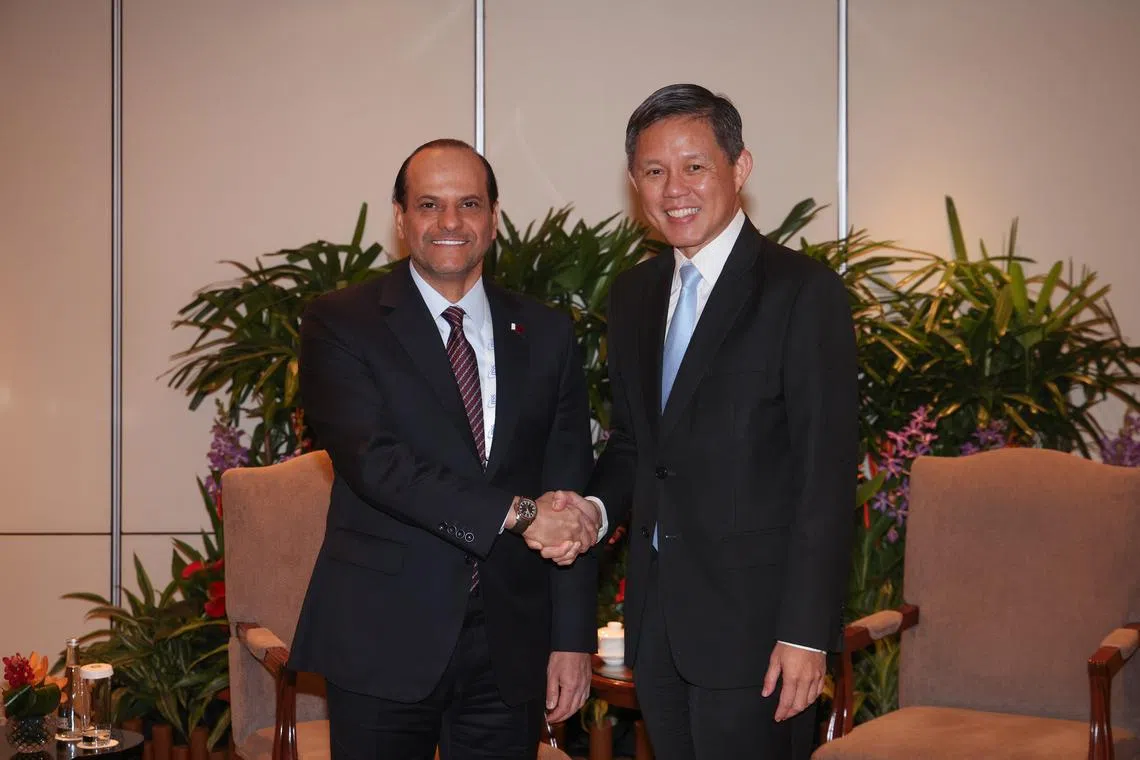
Bilateral security strategy is rapidly adapting to a reality where a crisis in one hemisphere can instantly cause economic fallout in another. Highlighting this interconnectedness, Singaporean Prime Minister Lawrence Wong met at the Istana with Qatar’s Deputy Prime Minister and Minister of State for Defense Affairs, Sheikh Saoud bin Abdulrahman Al Thani. The high-level meeting, occurring on the sidelines of the Shangri-La Dialogue, served as a vital mechanism for both nations to synchronize their strategic responses to volatile maritime security environments that threaten global trade stability.
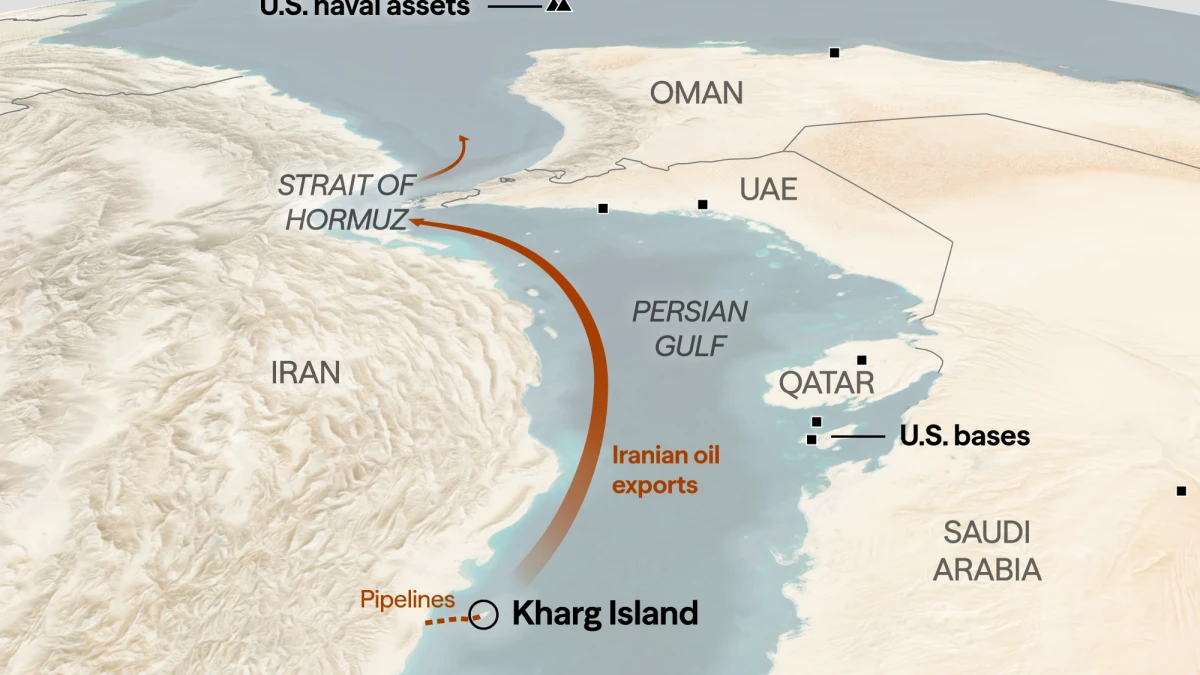
The timing of these talks is highly significant. For months, the ongoing military and political friction surrounding the Strait of Hormuz has severely disrupted international shipping lanes. Because the strait serves as the primary artery for global liquefied natural gas (LNG) and fertilizer shipments, its volatility has sent shockwaves through energy-dependent economies across Asia while directly complicating Qatar's primary export infrastructure.
Guarding the Arteries of International Trade
The core of the discussions centered heavily on the preservation of international maritime law. Both Singapore and Qatar are geographically positioned alongside critical global chokepoints—the Malacca Strait and the Strait of Hormuz, respectively—giving them a shared institutional understanding of how vulnerable global maritime logistics can be.
The two leaders focused their operational alignment on several key parameters:
-
Upholding Freedom of Navigation: The leaders explicitly reaffirmed the absolute necessity of maintaining open transit rights through international waterways, noting that arbitrary blockades or military targeting of civilian vessels violates established global conventions.
-
Securing Energy Supply Architectures: Prime Minister Wong highlighted that Singapore relies heavily on stable, predictable energy imports to fuel its industrial infrastructure, framing defense cooperation with Doha as a vital pillar of national economic resilience.
-
The Dilemma of Maritime Tolls: Addressing a highly controversial regional proposal regarding the formalization of traffic fees in the Gulf, Sheikh Saoud clarified Doha's firm opposition to permanent transit levies, though he noted that temporary, performance-linked charges strictly dedicated to humanitarian efforts like mine-clearing remain a negotiable option to restore normal passage.
Deepening the Defense Architecture
Beyond immediate crisis management, the meeting marked an intentional step toward broadening long-term military and security ties between Singapore and the Gulf Cooperation Council (GCC) framework. Qatar has increasingly established itself as a key diplomatic mediator, and Prime Minister Wong expressed Singapore's deep appreciation for Doha's constructive role in promoting political dialogue and trying to diffuse hostilities across the Middle East.
To ensure this diplomatic alignment translates into practical defense capabilities, the leaders reviewed opportunities to expand joint military coordination, including:
-
Information Sharing Protocols: Enhancing real-time data exchange regarding maritime domain awareness and threat profiles across primary trade lanes.
-
Strategic Counter-Terrorism Frameworks: Deepening collaboration between internal security agencies to address asymmetric risks and infrastructure vulnerabilities.
-
High-Level Strategic Exchange: Committing to more frequent bilateral consultations between senior military officers and defense ministries to navigate shifting geopolitical balances.
Realities of the Path Ahead
The cooperative framework established by Singapore and Qatar demonstrates how middle powers are proactively organizing to protect their interests from systemic global instability. When major international powers are locked in deep diplomatic gridlock, smaller, trade-reliant hubs must build independent networks of resilience.
By combining Singapore's highly advanced naval monitoring and logistical systems with Qatar's massive energy influence and deep diplomatic reach, this partnership creates a practical blueprint for cross-regional security. As the security environment continues to evolve rapidly, the ability of these two nations to synchronize their defenses will remain a critical factor in keeping global energy networks and shipping lanes operational.
What's Your Reaction?
 Like
0
Like
0
 Dislike
0
Dislike
0
 Love
0
Love
0
 Funny
0
Funny
0
 Wow
0
Wow
0
 Sad
0
Sad
0
 Angry
0
Angry
0






Comments (0)