
The Multi-Agency Crackdown on Iran’s Elite Tech Smugglers
In a coordinated strike under the "Economic Fury" banner, the U.S. Department of the Treasury, the FBI, and the Department of Commerce have completely neutralized a sophisticated corporate espionage ring that used shell companies and digital impersonation to funnel restricted American hardware to Tehran’s military-industrial complex.


The current landscape of geopolitical friction is increasingly fought through digital deception, shadow logistics pipelines, and the illicit acquisition of dual-use technologies. In one of the most significant enforcement strikes of the current cycle, the White House and the U.S. Department of the Treasury officially announced the total disruption of a highly sophisticated Iranian military procurement network.
Operating under the comprehensive strategy known as the "Economic Fury" campaign, a multi-agency coalition—including the FBI’s Los Angeles Field Office and the Bureau of Industry and Security—unmasked a complex corporate espionage web. The network had systematically defrauded dozens of American technology companies and electronics distributors out of millions of dollars in highly restricted, dual-use hardware destined for Iran’s defense ministry.
The Anatomy of a Digital Corporate Heist
According to detailed compliance filings released by federal investigators, the network was masterminded by Iran-based operative Ali Majd Sepehr and anchored by an front entity known as the Sorena Hushmand Samaneh Company (Sorena). Rather than relying on traditional black-market brokers, the ring executed an incredibly advanced digital impersonation strategy to compromise the supply chains of U.S. vendors.
The illicit operation relied on a precisely synchronized, three-tiered methodology:
-
Digital Business Impersonation: The network created highly polished, deceptive web domains that completely mimicked legitimate American small businesses and licensed tech contractors. Operatives used these cloned identities to submit fraudulent bulk-purchase requests to domestic manufacturers.
-
Transshipment via Neutral Hubs: To bypass strict "Know Your Customer" (KYC) compliance filters and hide the final destination of the cargo, the ring utilized logistics intermediaries based in Dubai, United Arab Emirates. Shipments were routed from the U.S. to Middle Eastern shipping hubs under the guise of civilian utility.
-
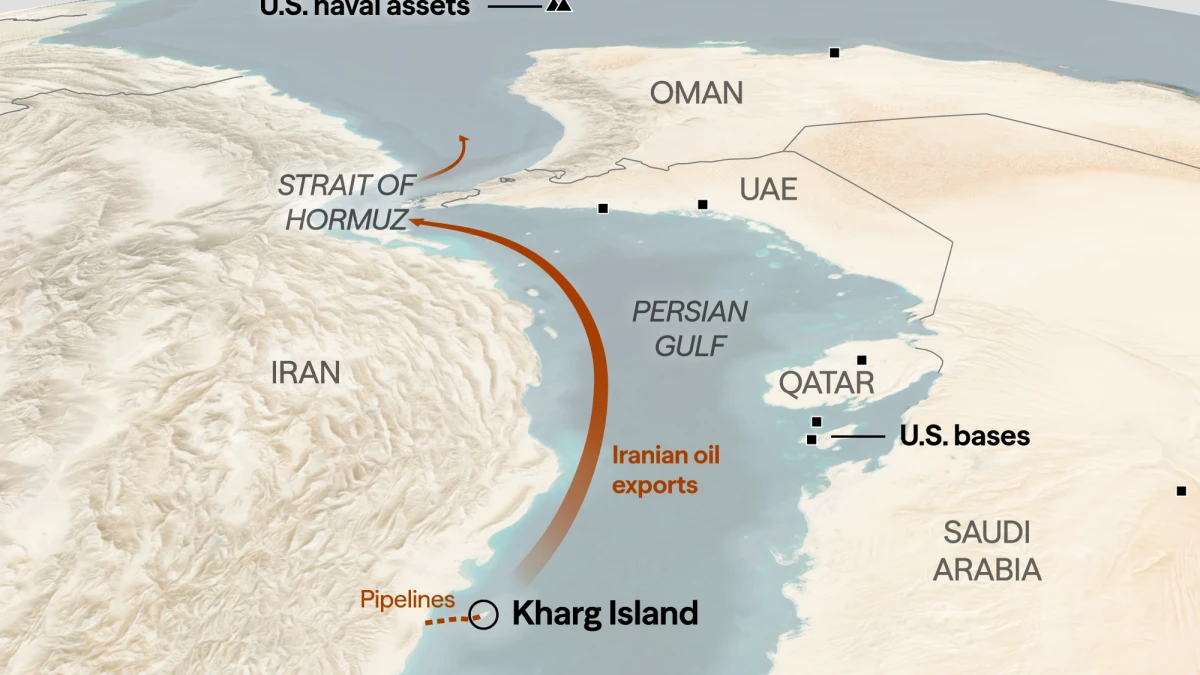
The Final Smuggling Corridor: Once offloaded in the UAE, entities like Green Light Computer Co LLC and Al Kawther Neon LLC re-packaged and forwarded the restricted military hardware across the Persian Gulf directly into the hands of Iranian defense sectors.
High-Value Targets: Spectrum Analyzers and Detectors
The core objective of this elaborate corporate espionage ring was the acquisition of specific, high-end diagnostic and counter-surveillance instruments. Investigators revealed that Sepehr’s network aggressively targeted advanced spectrum analyzers and non-linear junction detectors (NLJDs) on behalf of Sairan Information Exchange Space Security Industries Company (SAAFTA), an arm heavily controlled by Iran’s Ministry of Defense and Armed Forces Logistics (MODAFL).
In modern military architecture, these dual-use tools are invaluable. High-precision spectrum analyzers allow defense technicians to monitor radio-frequency signals, optimize electronic warfare suites, and calibrate military radar arrays. Concurrently, advanced junction detectors are vital for counter-espionage operations, enabling security teams to sweep secure facilities and detect hidden electronic circuits, remote-detonation triggers, or foreign spying devices, even if they are powered down.
Global Reach and Structural Enforcement Realities
The investigative trail revealed that the network’s operations extended directly into Europe. Treasury officials identified an Iranian national residing in Italy, Saied Zahedi, who allegedly utilized controlled Western financial accounts to systematically purchase the fraudulent internet domains used to execute the initial corporate impersonation schemes.
By leveraging Executive Order 13224, a powerful counter-terrorism tool, Washington has enacted total asset freezes on all named individuals, front companies, and secondary entities involved in the ring. Moving forward, any global freight forwarder, tech vendor, or financial clearinghouse that continues to facilitate business with Ali Majd Sepehr or the Sorena corporate network will face immediate exclusion from the U.S. financial system.
Ultimately, this multi-agency shutdown serves as an intense warning to global technology markets. It demonstrates that as state-sponsored procurement networks become increasingly digital, conventional physical customs borders are no longer a sufficient shield. For American technology manufacturers and software providers, the collapse of the Sepehr ring highlights the absolute necessity of integrating rigorous, AI-driven corporate identity verification protocols to prevent their proprietary innovations from being turned into weapons against the multilateral order.
What's Your Reaction?
 Like
0
Like
0
 Dislike
0
Dislike
0
 Love
0
Love
0
 Funny
0
Funny
0
 Wow
0
Wow
0
 Sad
0
Sad
0
 Angry
0
Angry
0









Comments (0)