
Ballots and Borders: Gilgit-Baltistan Concludes High-Stakes Election Under the Shadow of Domestic Bans and International Outrage
Voting has officially concluded for the long-delayed Gilgit-Baltistan Assembly elections. The democratic exercise was marked by an immense security presence across all constituencies, significant legal hurdles that forced local opposition candidates to run as independents, and a severe diplomatic confrontation between Islamabad and New Delhi.

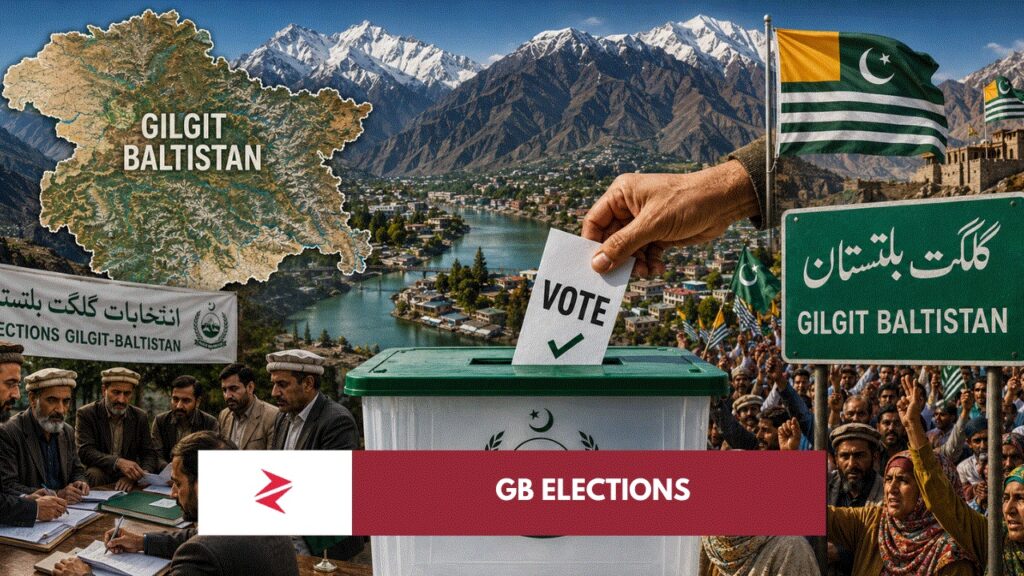
The ballots have been cast, the polling boxes are sealed, and the arduous process of counting has begun in one of the most geopolitically sensitive territories in South Asia. On Sunday, June 7, 2026, residents across Gilgit-Baltistan turned out to vote in the regional assembly elections, bringing an end to a highly volatile and heavily delayed electoral cycle that has kept the northern mountain territory on edge for months.
The election was originally supposed to take place during the winter under the close supervision of a fourteen-member caretaker cabinet. However, the Election Commission of Gilgit-Baltistan (ECGB) was forced to push the entire timeline into the summer after back-to-back blizzards and extreme high-altitude weather rendered hundreds of isolated mountain polling stations physically inaccessible for election staff and voters alike. While the arrival of summer resolved the logistical nightmare, it did nothing to cool down the intense domestic and international political friction surrounding the vote.
Heavy Security and the Battle of the Independent Blocs
From the moment the doors opened at dawn, the presence of state enforcement was undeniable. Armed police units, backed by frontier paramilitary forces, established strict cordons around all major voting centers, classifying dozens of stations as highly sensitive to prevent localized clashes between rival political workers.
The extraordinary security grid was necessitated by a highly controversial pre-election ruling from the ECGB. In a move that local opposition leaders condemned as state-sponsored engineering, the election commission stripped the Pakistan Tehreek-e-Insaf (PTI) party of its official electoral symbol.
This administrative decision completely disrupted the campaign landscape, yielding several major consequences on the ground:
-
The Independent Metamorphosis: Deprived of their unified party banner, dozens of PTI candidates were forced to register as independent contestants, adopting a confusing array of random individual symbols that made voter education incredibly difficult.
-
Fractured Local Leadership: The lack of a centralized ticket fractured local campaign structures, leading to multiple independent candidates claiming the true legacy of the party within the same constituency.
-
A Strategic Advantage for the Coalition: The administrative sidelining of a major opposition bloc provided a clear, unobstructed path for the traditional mainstream parties aligned with the federal coalition in Islamabad to maximize their seat count.
The Diplomatic Blast From New Delhi
While politicians inside Gilgit-Baltistan wrestled over local governance and infrastructure budgets, the true scale of the geopolitical stakes exploded on the international stage. As lines formed at the polling booths, the Ministry of External Affairs in New Delhi issued an exceptionally sharp, uncompromising diplomatic dispatch to Islamabad, completely rejecting the legitimacy of the entire election.
In its formal protest, India reiterated its foundational legal position, declaring the entirety of Gilgit-Baltistan, alongside Azad Jammu and Kashmir, to be an integral, inalienable part of its sovereign territory. New Delhi accused Pakistan of conducting a flawed democratic exercise in a disputed area to artificially legitimize an unlawful occupation, demanding that Islamabad dismantle its administrative structures and completely vacate the region.
A Complicated Path Forward
The dual pressures of domestic political suppression and international diplomatic condemnation leave Gilgit-Baltistan in a deeply precarious position as the initial results begin to trickle in. For the federal government in Islamabad, successfully executing this election was viewed as a necessary step to project administrative normalcy and lock in regional stability.
However, by forcing popular opposition figures out of the formal party structures and drawing an aggressive counter-response from India, the election may end up fueling more long-term instability than it resolves. As the local election boards tally the independent ballots in the coming days, the newly formed assembly will have to navigate its local legislative duties under the heavy, permanent shadow of a bitter South Asian territorial dispute.
What's Your Reaction?
 Like
0
Like
0
 Dislike
0
Dislike
0
 Love
0
Love
0
 Funny
0
Funny
0
 Wow
0
Wow
0
 Sad
0
Sad
0
 Angry
0
Angry
0











Comments (0)