
Locked and Loaded: Hegseth Warns U.S. is Fully Prepared to Resume War If Iran Crosses Red Lines
Speaking at the high-stakes Shangri-La Dialogue in Singapore, U.S. Secretary of War Pete Hegseth delivered an uncompromising warning to Tehran, stating that the American military remains completely capable of abandoning ceasefire talks and restarting active combat operations if diplomatic agreements falter.


The diplomatic push for a lasting ceasefire in the Middle East has hit a wall of heavy American military rhetoric. Speaking before a packed auditorium of international defense ministers and naval commanders at the Shangri-La Dialogue in Singapore, U.S. Secretary of War Pete Hegseth made it explicitly clear that Washington’s willingness to negotiate has definitive, hard boundaries.
Addressing the summit during a pivotal plenary session, Hegseth issued a stern, direct warning to the Iranian delegation and its regional proxies. He declared that the United States military is more than capable of resuming active warfare immediately if any final negotiated peace framework violates the strict nuclear development and maritime security red lines established by President Donald Trump.
The Line in the Sand at Singapore
Hegseth’s address arrives at a highly sensitive moment for international diplomacy. While parallel talks mediated by regional partners have attempted to finalize a 60-day regional ceasefire accord, the underlying military friction on the ground has continued to escalate. The Secretary of War used his platform to counter any perception that Washington’s diplomatic engagement is a sign of operational fatigue or a retreat from its traditional security commitments in the Middle East.
The Pentagon's warning is anchored to several non-negotiable compliance parameters:
-
The Absolute Nuclear Ceiling: Hegseth emphasized that any acceptable diplomatic accord must mandate the immediate, verifiable freezing of all high-grade uranium enrichment activities across Iranian facilities.
-
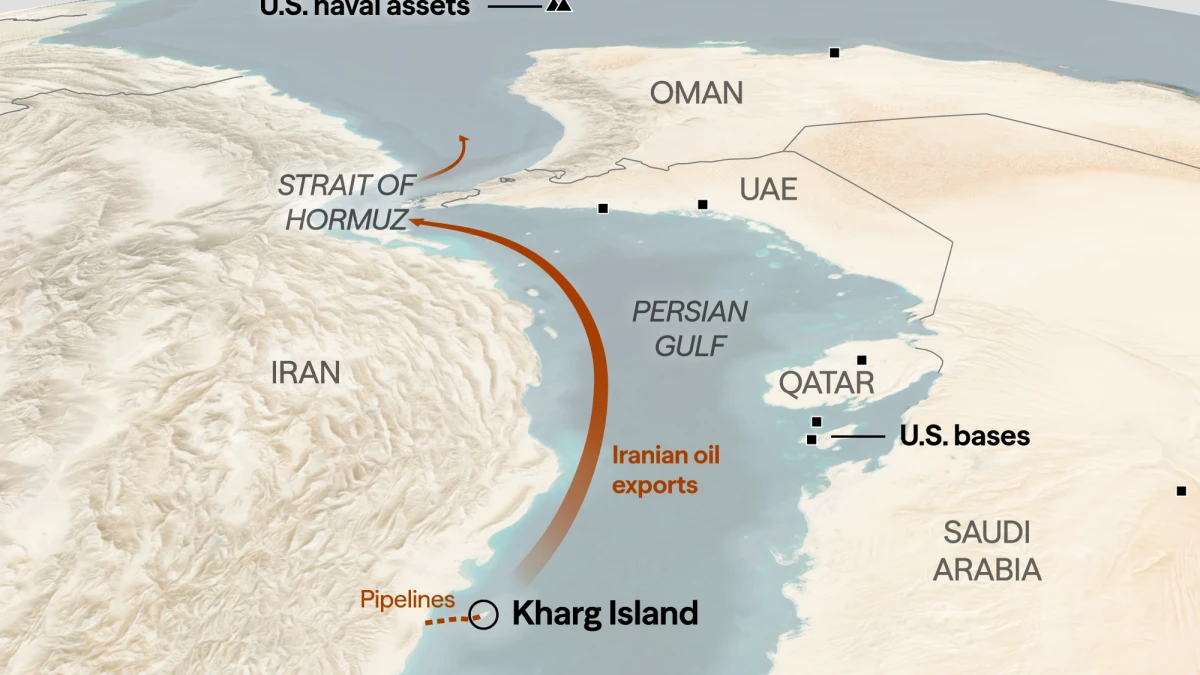
Maritime Passage Protections: The U.S. will reject any framework that does not guarantee unhindered, safe commercial passage through the Strait of Hormuz, completely free from state-sponsored harassment or arbitrary transit tolls.
-
The Proximate Defense Vector: Washington expects a total cessation of advanced weapon transfers to regional non-state actors, framing the proliferation of drone and missile technology as a direct threat to the broader international order.
Real-Time Deterrence in the Skies
To prove that the administration's warnings are not merely rhetorical posturing, Hegseth pointed directly to active operational deployments currently unfolding across the Persian Gulf. Even as diplomats review draft agreements, U.S. Central Command has aggressively ramped up its aerial presence.
The Pentagon recently released verified flight footage of F-16 Fighting Falcon fleets executing high-visibility deterrence patrols over critical shipping lanes. These combat missions follow a series of targeted U.S. air strikes on the Iranian port of Bandar Abbas, which were executed to neutralize missile storage facilities. Hegseth framed these ongoing air patrols as living proof that American forces remain present, vigilant, and structurally positioned to transition from deterrence to active combat within minutes if conditions deteriorate.
The Burden of Allied Alignment
Beyond the direct warnings aimed at Tehran, Hegseth’s speech also contained an uncomfortable message for America's regional and international allies. The Secretary of War stated that maintaining a locked and loaded posture requires genuine, reciprocal burden sharing from regional partners. He warned that the era of relying exclusively on American military spending and logistics to anchor local security grids is coming to an end, challenging allied nations to rapidly scale up their own defensive budgets and naval contributions.
As defense delegations exit the Singapore summit, the immediate future of the Middle Eastern security landscape hangs in a delicate balance. By openly threatening a return to full-scale military conflict on an international stage, the United States has effectively raised the stakes of the ongoing ceasefire negotiations. For Tehran, the message from the Shangri-La Dialogue is unmistakable: any attempt to use diplomacy as a cover to quietly advance its strategic weapons programs will be met with immediate, overwhelming kinetic force.
What's Your Reaction?
 Like
0
Like
0
 Dislike
0
Dislike
0
 Love
0
Love
0
 Funny
0
Funny
0
 Wow
0
Wow
0
 Sad
0
Sad
0
 Angry
0
Angry
0








Comments (0)