
The Brickyard Blueprint: Engineers Finalize Tactical Formations for the Indy 500
Long before the engines fire on the historic 2.5-mile oval, racing teams endure a grueling chess match in the garages, calculating the precise intersection of drag reduction, tire degradation, and electronic fuel mapping.

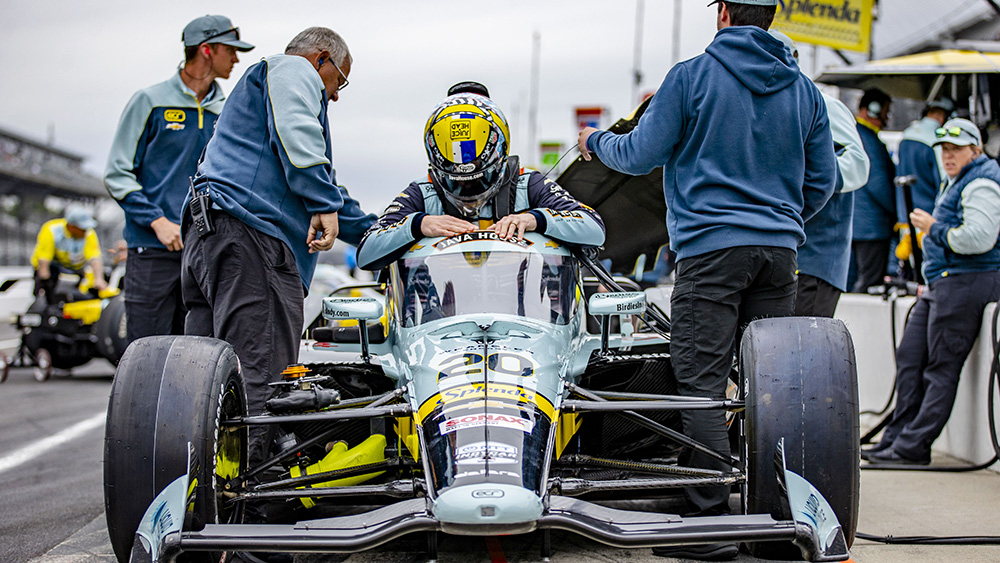
There is a distinct, rhythmic anxiety that defines the final hours inside the Gasoline Alley garages at the Indianapolis Motor Speedway. While casual observers focus on the blinding speed and the sensory overload of 33 cars screaming down the front stretch at over 230 miles per hour, the true fate of the race is frequently decided in the quiet, clinical space of the engineering bays.
The Indianapolis 500 is fundamentally an exercise in managed compromise. The margin between a historical victory and a catastrophic wall impact comes down to fractions of a millimeter in ride height, a quarter-degree of wing angle, and the electronic efficiency of internal combustion algorithms. As teams finish their strict final adjustments and lock in their engine pacing arrays, they are not just tuning a racecar—they are programming a high-velocity chess piece designed to survive a 500-mile war of attrition.
The Aerodynamic Balancing Act: Trim vs. Traffic
The primary engineering battle at Indianapolis involves navigating the hostile aerodynamic wake left by a pack of open-wheel cars. Running completely alone in clean air requires a vastly different mechanical setup than fighting for position in the middle of a turbulent 10-car draft.
To prepare for these tactical shifts, team engineers divide their final chassis configurations into two distinct priorities:
-
Qualifying Trim Exploration: Stripping the car of all non-essential downforce. Engineers run the thinnest possible rear-wing profiles to minimize drag, pushing the limits of mechanical grip to maximize outright speed over a four-lap average.
-
Traffic Comfort Calibration: Adding calculated increments of downforce back into the front wings and floor underwings. This adjustments gives the driver the necessary front-end authority to cut through the dirty, disrupted air currents left by leading cars, preventing the front tires from washing out in the middle of high-speed turns.
Finding the sweet spot where the car remains fast enough to defend on the long straights, yet stable enough to execute a pass in the short chutes, requires a deep dive into historical wind-tunnel and track data. A mistake in either direction risks leaving the driver defenseless against aggressive charging maneuvers.
Micro-Managing the Powertrain: Engine Pacing Arrays
Beyond the physical geometry of the suspension and wings, the modern speedway landscape is heavily governed by digital mapping. With the field restricted by strict aerodynamic boundaries and matching engine specifications, the competitive edge shifts directly to electronic management.
Teams utilize a multifaceted engine pacing array to optimize performance across varying race scenarios:
                          [ SPEEDWAY ENGINE PACING ARRAY ]
                                         │
        ┌────────────────────────────────┼────────────────────────────────┐
        ▼                                ▼                                ▼
[ PURE VELOCITY MAP ]            [ FUEL CONSERVATION MAP ]        [ COOL-DOWN/CAUTION PROFILE ]
Maximum boost utilization        Lean-burn fuel-air mixture       Throttled thermal reduction
Aggressive short-stint passing   Drafting economy maximization    System protection under yellow
During a green-flag stint, the strategist's primary job is calculating the fuel-burn rate. When a driver is tucked neatly behind a competitor in a draft, the engine requires substantially less throttle input to maintain terminal velocity. By clicking a steering-wheel dial to a pre-mapped "lean-burn" profile, the driver can extend their fuel window by two or three vital laps. This minor stretch flips pit-stop strategy upside down, allowing a team to short-fill during a late-race caution or execute an overcut that bypasses traffic entirely in pit lane.
The Mechanical Integrity Audit
As the final countdown begins, chief mechanics execute strict structural safety audits, checking every critical component under extreme stress profiles.
-
Thermal Fatigue Scanning: Teams use infrared thermography to inspect suspension pushrods, brake calipers, and wheel hubs, searching for hidden microscopic fractures caused by repetitive high-G loading through the speedway’s four distinct corners.
-
Laser Ride-Height Optimization: Titanium skid plates beneath the carbon-fiber floorboards are measured using multi-point lasers down to thousandths of an inch. Teams aim to run the car as close to the asphalt as legally permissible to maximize ground-effect downforce without bottoming out over the track's subtle bumps.
-
Gearbox Precision Shimming: The six-speed sequential transaxles are torn down, inspected, and rebuilt with custom-shimmed gear ratios tailored explicitly to the ambient wind direction and expected track temperatures forecast for race day.
Ultimately, the Indianapolis 500 rewards mathematical discipline just as much as it demands raw courage. The drivers who stand on the victory podium and etch their names into the Borg-Warner Trophy are simply the visible point of an immense, highly analytical spear. Behind the visors and the tire smoke stands an army of engineers who understood that the quickest way to find victory lane is to map it completely in code before the green flag ever drops.
What's Your Reaction?
 Like
0
Like
0
 Dislike
0
Dislike
0
 Love
0
Love
0
 Funny
0
Funny
0
 Wow
0
Wow
0
 Sad
0
Sad
0
 Angry
0
Angry
0








Comments (0)